

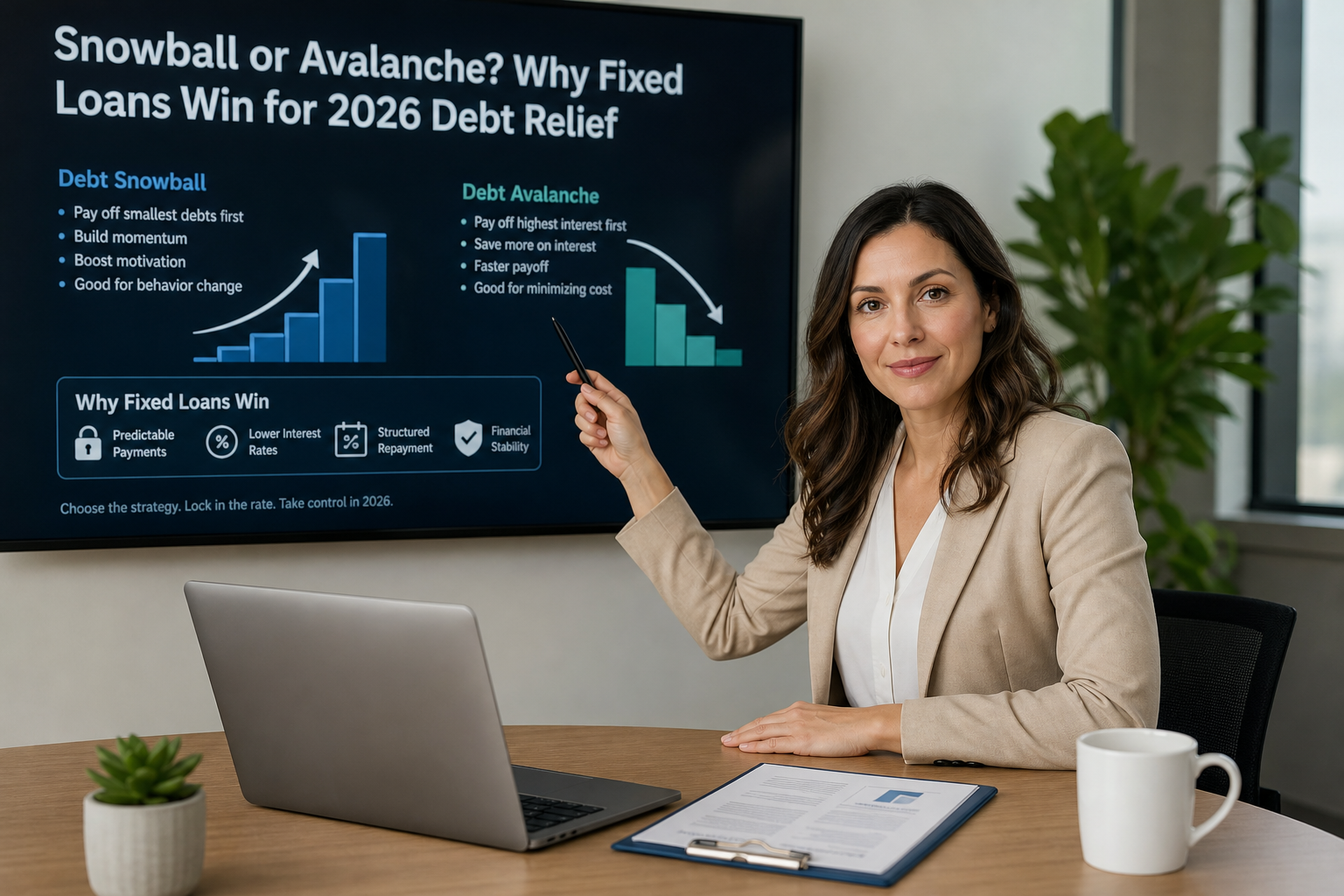
As we look toward 2026, consumers grappling with debt must navigate an increasingly complex financial landscape. With elevated credit card APRs exceeding 20% and tighter bank underwriting policies, borrowers are faced with tough choices in strategizing their debt relief. Among the ever-popular methods—Snowball vs. Avalanche—fixed loans are emerging as the optimal choice for many. Here’s a closer examination of why fixed-rate personal loans outperform both traditional payoff strategies and revolving credit options in achieving sustainable debt relief.
Fixed Loans vs. Revolving Credit: The 2026 Debt Strategy Showdown
In the current economic environment, characterized by rising costs across essential services and a fluctuating Federal Reserve benchmark rate, borrowers need more than a simple strategy; they need a robust plan. Fixed-rate personal loans offer predictable monthly payments and a clear timeline for debt repayment, making them an attractive option for consumers wary of fluctuating interest rates. In contrast, revolving credit options like HELOCs or personal lines of credit often come with variable rates, which can lead to unanticipated increases in monthly payments during economically turbulent times.
The snowball and avalanche methods, while popular, can also fall short in a landscape where debt consolidation offers a more streamlined approach. For instance, a borrower with $12,000 in credit card debt might face an 18-month 0% APR balance transfer option, but when factoring in a 3% transfer fee, they’d incur $360 upfront. If they can’t pay off the full balance in that period, they risk being slapped with an APR that could exceed their original rates. Meanwhile, a 36-month fixed personal loan at 11.5% APR would stabilize their payments and avoid the pitfalls of fluctuating interest, especially if they cannot consistently manage their cash flow.
In this showdown, borrowers seeking simplicity and predictability should lean towards fixed loans. The clarity of a singular payment structure allows for better budgeting and long-term planning, which is crucial as many consumers face rising auto and utility carrying costs. Fixed loans provide peace of mind, particularly for those already strained by high-interest debt and uncertain economic conditions.
Why Debt Consolidation with Fixed Rates Outperforms Alternatives
Debt consolidation through fixed-rate loans offers not only a strategic edge but also a mathematical one. With a fixed personal loan, the borrower can lock in rates that are often lower than those of existing credit card debt. Let’s take the earlier example of a $12,000 credit card debt; if this debt carries an average APR of 20%, the monthly payment for just interest alone could exceed $200, adding to the overall financial strain. By consolidating this debt with a fixed-rate loan at 11.5% APR, the borrower can reduce this monthly burden significantly, allowing more freedom in their budget to address other expenses.
Additionally, the allure of 0% intro APR balance transfer cards may draw in a well-qualified borrower, but these come with inherent risks. Many promotional offers last only 12 to 18 months, and if the debt isn’t paid in full by then, the borrower is left facing exorbitant interest rates. For example, let’s say they only manage to pay off $6,000 in that window; the remaining balance now reverts to a high-interest rate, compounding the debt further. Fixed-rate loans, on the other hand, provide a straightforward path to eliminating debt without the looming threat of sudden interest rate increases and the psychological burden of managing multiple accounts.
The bottom line is that fixed-rate debt consolidation appeals not just to those with lower credit scores, but to a broad spectrum of borrowers. Whether you’re a disciplined planner or someone seeking a clear path out of financial chaos, fixed loans offer the stability needed in a time of economic uncertainty. By locking in a fixed rate, borrowers can better manage their cash flow and plan for a brighter financial future.
As we approach 2026, the choice between fixed loans and revolving credit becomes increasingly critical for debt relief strategies. Fixed-rate personal loans offer borrowers a structured, predictable means to tackle high-interest debt while providing a stable payment schedule conducive to better financial management. Whether you’re aiming to consolidate existing debt or simply seeking a way out of a financial quagmire, the benefits of fixed loans far outweigh the risks associated with traditional methods like the Snowball or Avalanche strategies. In these unpredictable times, aligning your debt relief approach with financial stability may be the best strategy you can implement.