

Understanding the nuances between 36-month and 60-month loans can be crucial for borrowers aiming to optimize their debt repayment strategy. With today’s economic landscape characterized by high credit card APRs that often exceed 20%, and rising costs associated with utilities and auto loans, navigating your options is more important than ever. This article digs deep into the trade-offs between shorter and longer loan terms to help you align your financial goals with the most effective debt payoff strategy.
Understanding the Cost Differences: 36-Month vs. 60-Month Loans
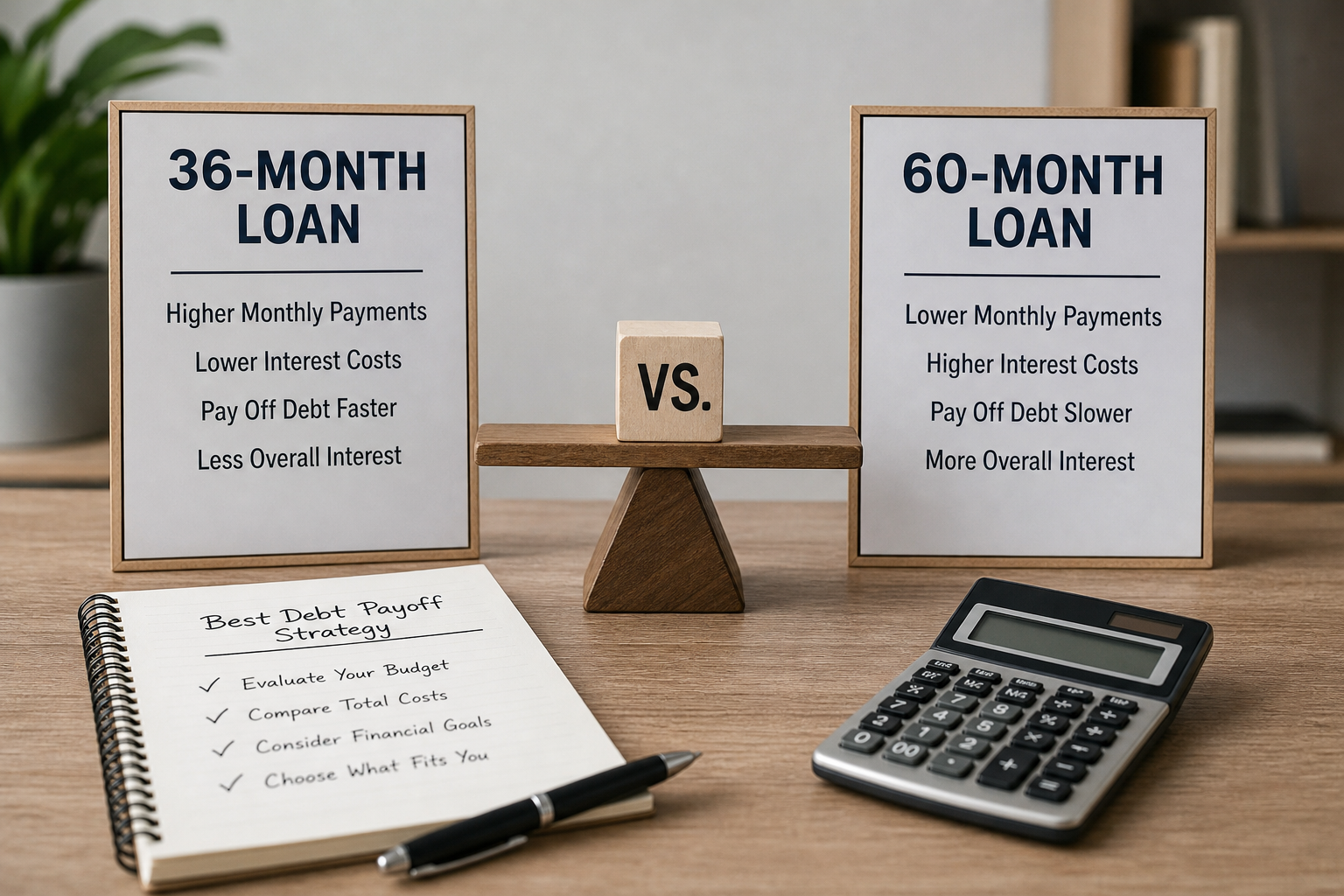
When evaluating 36-month and 60-month loans, the most striking difference lies in the total interest paid over the life of the loan. For a $12,000 loan, a 36-month fixed-rate personal loan at 11.5% APR will cost approximately $1,900 in interest, whereas a 60-month loan at the same rate will total about $3,600 in interest. While the monthly payment for the 36-month loan would be around $400 compared to $260 for the 60-month option, the longer-term loan can be tempting for those craving lower monthly expenditures. However, this comes at the cost of paying nearly double in interest, emphasizing the need for borrowers to consider their long-term financial health over immediate cash flow relief.
Another factor to consider is the flexibility offered by different types of loans. While fixed-rate personal loans stabilize your monthly payments, revolving lines of credit, such as home equity lines of credit (HELOCs) or personal lines of credit (LOCs), allow for potentially lower rates but come with variable interest. In an environment where the Federal Reserve is increasing benchmark rates, locking in a fixed-rate personal loan could serve to shield you from future rate hikes, making it an appealing choice for those who want predictability in their financial obligations.
Finally, while consolidating debt can be a useful strategy, the length of the loan impacts your overall financial situation. If you carry high-interest credit card debt at 20% or more, a 0% intro APR balance transfer card might provide a temporary lifeline. However, understanding the transfer fees—typically ranging from 3% to 5%—is crucial. For instance, transferring $12,000 with a 3% fee incurs a $360 upfront cost, which you still need to pay down within the promotional period to avoid high interest later. This can make a 36-month personal loan a more straightforward and less risky option for those looking to eliminate debt quickly.
Strategic Loan Choices: Aligning Debt Payoff with Financial Goals
Your financial goals will play a significant role in determining whether a 36-month or 60-month loan is a better fit. If your primary aim is to minimize the total interest paid, then the 36-month loan is clearly favorable. This strategy appeals to disciplined borrowers who can manage higher monthly payments in exchange for a swift pathway to debt freedom. On the other hand, if your cash flow is tight, a 60-month loan can provide more manageable payments, giving you the breathing room to maintain financial stability while gradually paying down debt.
It’s also worth evaluating how these choices align with your credit profile. High-FICO borrowers may find it easier to secure lower rates on 36-month loans, making it a viable option for consolidating existing debt. Conversely, if you have a less-than-stellar credit score and are facing elevated rates on existing debts, a 0% balance transfer card may initially seem appealing. However, failing to pay off that balance before the promotional period ends could result in a significant interest rate spike, reversing any initial savings. For those with unpredictable income or spending habits, a fixed-rate personal loan might offer a safer, more reliable path.
Finally, consider the big picture of your overall financial strategy. If you’re juggling multiple debts—some with sky-high interest rates—using a loan to consolidate these debts can be a tactical way to regain control. You might prefer a 36-month loan for its faster repayment terms, or a 60-month loan if it aligns better with your cash flow. Ultimately, the decision should be rooted in an analysis of your entire financial landscape, including not just your debts but also your income, expenses, and long-term financial aspirations.
The choice between a 36-month and a 60-month loan requires careful consideration of both immediate cash flow needs and long-term financial impact. By weighing the total interest costs against your monthly budget, you can make a more informed decision that aligns with your broader financial strategy.
The Bottom Line:
- Calculate Total Interest: Use specific numbers based on your loan amount and interest rate to identify how much you’ll pay.
- Assess Your Cash Flow: Determine if you can manage higher monthly payments or need the lower payments associated with a longer loan.
- Evaluate Credit Options: Align your loan choice with your credit profile and the associated interest rates.
- Consider Consolidation: If juggling multiple debts, think about the benefits of consolidating them into a single, manageable loan.
By following these steps, you can better position yourself for a clearer path toward financial stability and freedom from debt.