

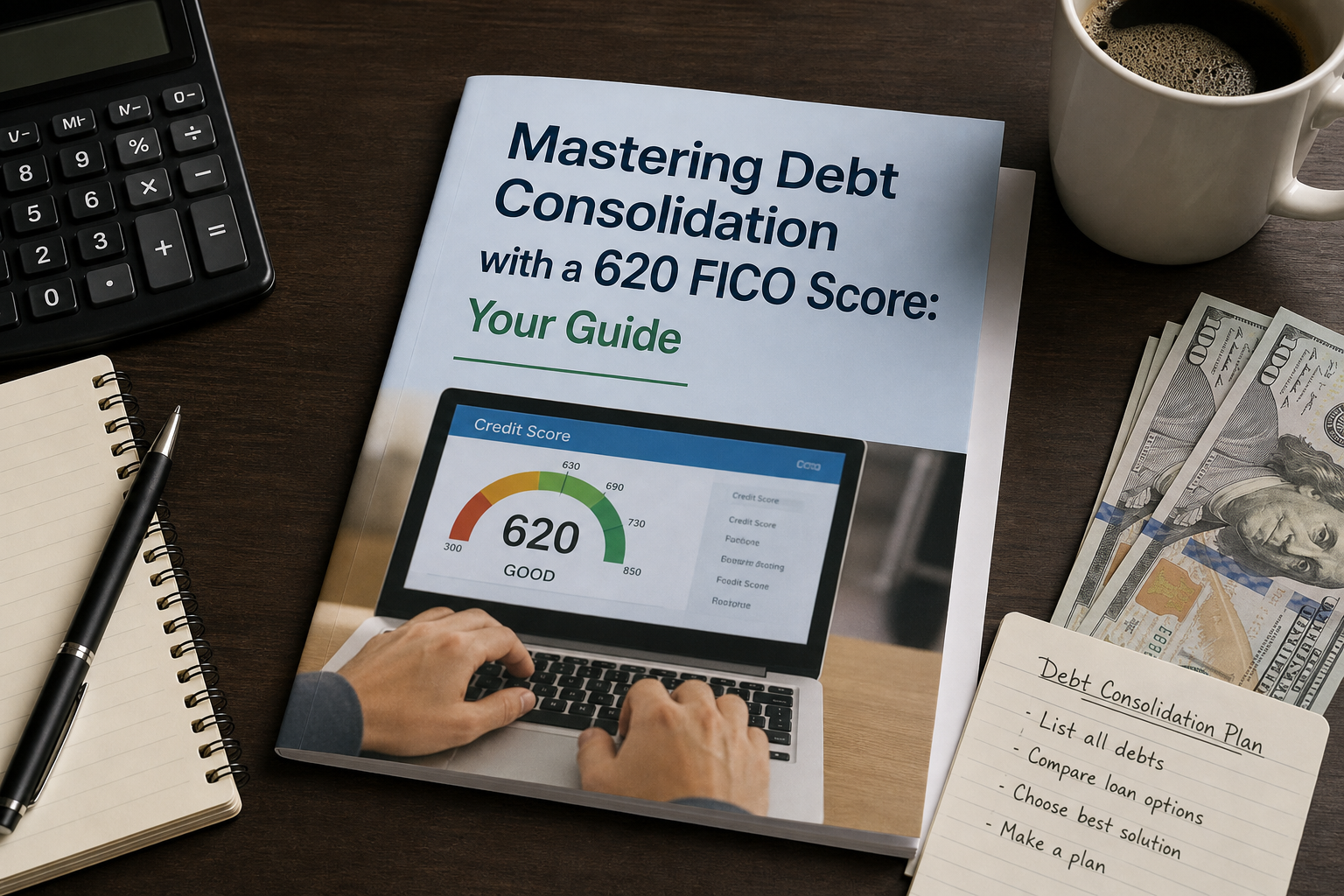
Navigating debt consolidation with a 620 FICO score can feel like traversing a financial minefield. As consumer credit conditions tighten, especially with elevated credit card APRs often exceeding 20% and the Federal Reserve’s fluctuating benchmark rates, borrowers with fair credit need a strategic approach to managing debt. This guide delves into the nuances of consolidation options available to you, comparing fixed personal loans to balance transfer credit cards, while also addressing common pitfalls and actionable strategies for effective debt management.
Navigating Debt Consolidation with a 620 FICO Score Today
With a FICO score of 620, your options for debt consolidation are limited but not nonexistent. Traditional banks may offer you higher interest rates or deny applications altogether due to risk assessments. However, alternative lenders and credit unions often provide avenues for fixed-rate personal loans that could provide a pathway to lower monthly payments. When evaluating your options, it’s critical to assess not only the interest rate but also the loan term and total repayment costs. For instance, a personal loan at 11.5% APR for $12,000 over 36 months would result in approximately $1,700 in interest, while the same amount at a higher rate could escalate your financial burden significantly.
Alternatively, you might consider balance transfer credit cards, especially those offering a 0% introductory APR. This option allows you to transfer existing high-interest debt from credit cards and pay it off without accruing additional interest during the promotional period. However, keep in mind the 3-5% transfer fees that can add up. For example, transferring $12,000 at a 3% fee incurs an immediate cost of $360, which should be factored into your total debt repayment calculations. Your discipline in paying off the balance before the introductory period ends is crucial—missing this window can lead to high-interest charges.
Ultimately, the decision hinges on your financial habits and circumstances. If you’re confident in your ability to pay off the debt within the promotional window of a balance transfer, this option can save you money. Conversely, if you anticipate challenges in managing payments, a fixed-rate personal loan could provide the stability you need to avoid additional debt accumulation.
Strategic Choices: Fixed Loans vs. Balance Transfers Explained
When comparing fixed personal loans to balance transfers, it’s essential to consider the long-term implications of each choice. A fixed personal loan locks in your interest rate, providing predictability in your monthly payments. This structure helps to facilitate better cash flow management, especially when budgeting for essential expenses. For those with a 620 FICO score, a fixed loan might come with a higher interest rate, but the appeal lies in its structured repayment plan, enabling you to avoid the traps of revolving credit.
On the other hand, 0% APR balance transfer cards can be alluring due to their potential for immediate savings. For a borrower with $12,000 in credit card debt, a typical 18-month promotional period allows you to pay off the full amount without interest—if you can manage it within that timeframe. However, if you miss a payment or fail to pay off the balance before the promo ends, you could face interest rates exceeding 20%. Furthermore, the promotional period can often feel deceptively short, especially if you’re already struggling with cash flow.
To aid in your decision, consider the math closely. For example, if you took a fixed-rate personal loan at 11.5% for three years, you’d pay a total of about $13,700 (including interest). In contrast, using a balance transfer with a 3% fee would calculate to an upfront cost of $360, and provided you can clear the debt within the 18-month window, this can save you significantly—assuming you avoid overspending and focus on repayment. Your strategic choice should reflect not only the numbers but your financial discipline and risk tolerance.
Mastering debt consolidation at a 620 FICO score revolves around understanding your options and aligning them with your financial habits. Choose a fixed personal loan if you prefer stability and can manage fixed payments within your budget. Alternatively, a balance transfer card could be beneficial if you’re adept at handling cash flow and can commit to meeting the repayment deadline. The bottom line? Assess your options critically, factor in all associated costs, and prioritize a consolidation strategy that keeps you on a path toward financial recovery.
Next Steps:
- Evaluate Your Debt: Calculate total debt and assess your current interest rates.
- Research Lenders: Look for both traditional and alternative lenders offering reasonable terms for personal loans.
- Explore Credit Cards: If considering a balance transfer, review the promotional terms and ensure you can pay off the balance before the rate resets.
- Create a Repayment Plan: Develop a realistic budget to track your progress and adjust as needed.
- Monitor Your Credit: Keep an eye on your credit score as you manage your debts to gauge improvement and explore better financing options in the future.