

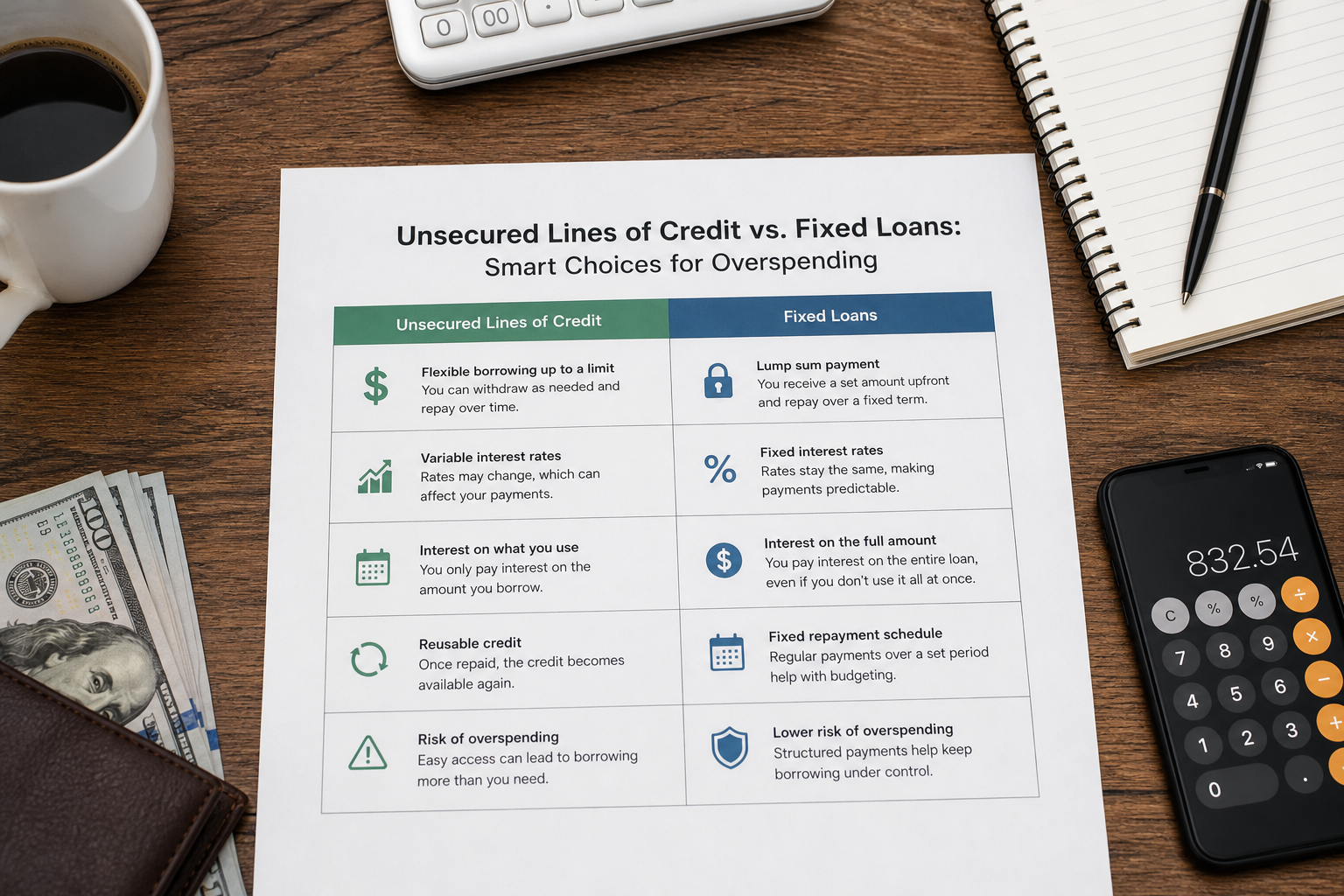
When it comes to managing chronic overspending, choosing between unsecured lines of credit and fixed loans can significantly affect your financial trajectory. With current credit card APRs hovering above 20% and the Federal Reserve tightening monetary policy, borrowers need to pinpoint which financial tool best aligns with their repayment discipline and cash flow. Let’s break down the core differences between unsecured lines of credit, such as personal lines of credit (LOCs) and home equity lines of credit (HELOCs), versus fixed-rate loans to determine which option serves as a more effective remedy for overspending addiction.
Unsecured Lines of Credit: Flexibility vs. Fixed Loans’ Stability
Unsecured lines of credit offer unmatched flexibility, allowing borrowers to access funds as needed without having to draw the entire amount at once. This can be particularly advantageous for those with fluctuating cash flow needs. For instance, if a borrower has a line of credit of $20,000 and only uses $5,000 to cover an unexpected car repair, they only pay interest on that $5,000. However, this flexibility can also be a double-edged sword; without careful budgeting, it can lead to increased spending due to easy access to funds, potentially perpetuating a cycle of overspending.
In contrast, fixed loans present a more rigid structure that can foster discipline in repayment. With a set amount borrowed, typically at a fixed interest rate, borrowers have predictable monthly payments. For example, a $12,000 personal loan at 11.5% APR over three years results in monthly payments of about $392. This fixed nature can help instill better financial habits, as borrowers are less likely to overspend when they know their obligations are unchangeable. However, the rigidity means less adaptability to cash flow fluctuations, and borrowers could find themselves in trouble during periods of financial strain.
Ultimately, the choice between these two vehicles boils down to the borrower’s financial habits and situational factors. A borrower with a disciplined repayment strategy might thrive with a fixed-rate loan, while someone who benefits from ongoing access to funds—and can manage their spending—might prefer the flexibility of an unsecured line of credit. Understanding these dynamics can help make the right choice for your financial journey.
Navigating Overspending: Smart Strategies for Borrowers
For borrowers grappling with overspending, strategic debt consolidation can provide a lifeline. Using a 0% introductory APR balance transfer credit card can serve as a short-term solution for high-interest credit card debt. For instance, transferring $12,000 of credit card debt to a card with a 0% promotional rate for 18 months, along with a 3% transfer fee ($360), results in total costs of $360. If managed well, this can save a borrower significant interest compared to maintaining the original debt, especially if their existing rate is 20% or higher.
It’s essential, however, to keep an eye on the promotional window. Failing to pay off the balance within the 18-month timeframe could lead to accruing interest at a potentially steep rate on any remaining balance. For example, if the borrower still owes $6,000 after the promo period, they might incur a 19% APR, leading to an additional cost of around $1,140 in interest over a year. Thus, the math behind a balance transfer card is compelling, but discipline is crucial, as falling back into overspending can negate the initial savings.
Simultaneously, a fixed personal loan could be an excellent choice for those needing to consolidate various debts into one manageable payment. By rolling high-interest debts into a fixed loan, borrowers can stabilize their monthly outflow and create a clearer path to debt freedom. For someone with a mix of debts totaling $12,000 at an average 18% APR, moving to an 11.5% fixed-rate personal loan not only simplifies payments but also reduces interest costs and provides predictability.
In summary, both unsecured lines of credit and fixed loans have unique benefits and drawbacks tailored to different financial situations. If you thrive on flexibility and have a disciplined approach to spending, an unsecured line of credit may serve your needs best. Conversely, if you struggle to maintain control over your cash flow, opting for a fixed-rate personal loan can promote accountability and financial stability. The key takeaway is to evaluate your spending habits, consider your financial goals, and calculate the numbers carefully.
Next Steps:
- Assess your current debt situation and spending habits.
- Compare interest rates and terms for unsecured lines of credit and fixed loans.
- Explore 0% balance transfer offers if you have high-interest credit card debt.
- Create a realistic budget that incorporates your potential loan or credit repayments.
- Commit to a repayment plan that aligns with your cash flow and lifestyle.