

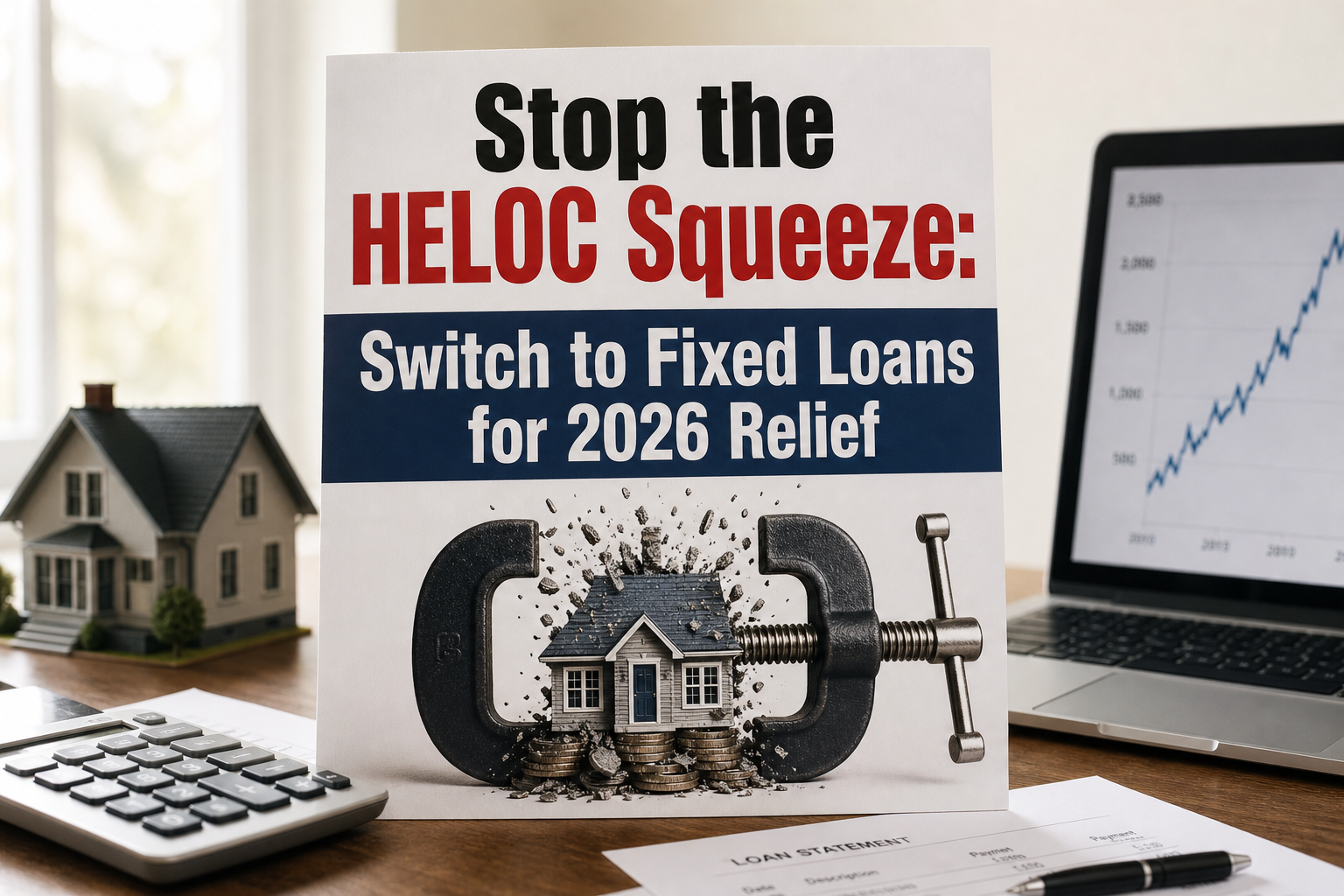
As the financial landscape continues to shift, homeowners with Home Equity Lines of Credit (HELOCs) are finding themselves squeezed tighter than ever. With the anticipated resets in 2024 leading to potentially substantial payment increases, it’s crucial to explore alternatives that can provide relief heading into 2026. Switching to a fixed personal loan offers a strategic lifeline that not only protects against rising costs but also stabilizes your financial outlook.
Escape the HELOC Pressure: Switch to Fixed Loans Now
HELOCs, often touted for their flexibility, are rapidly becoming a double-edged sword as interest rates soar. With many borrowers currently facing rates above 20% on credit cards, the impending reset of HELOCs will likely exacerbate the pain for those who are unprepared. If your HELOC is set to transition into its repayment phase, you could be looking at steep monthly payments that will strain your budget, forcing you to make difficult financial decisions. Switching to a fixed-rate personal loan not only halts this trajectory but ensures predictable payments that can be planned for over time.
Consider the math: a typical HELOC interest rate could hover around 8% during a reset, while a fixed personal loan may currently be available at around 11.5%. While the fixed loan appears more expensive upfront, the certainty it offers can be invaluable. For instance, if you have a balance of $30,000 on a HELOC and it shifts to a variable rate, your payment could fluctuate wildly. In contrast, locking in a fixed rate allows you to stabilize your budget and avoid the peril of increased monthly payments in a recessionary environment.
Moreover, many borrowers mistakenly believe that a HELOC is their only option for tapping into home equity. However, fixed-rate personal loans provide an accessible path for debt consolidation, especially for those already navigating high-interest credit card debt. By consolidating your debts with a fixed loan, you can escape the revolving cycle of minimum payments and interest accrual that characterizes credit cards and HELOCs. This not only simplifies your budget but also accelerates your debt repayment strategy.
Unlock Financial Freedom: Effective Strategies for 2026 Relief
With interest rates continuing to fluctuate, strategic debt consolidation is essential for maintaining financial stability. One effective approach is utilizing 0% introductory APR balance transfer credit cards, which allow borrowers to transfer existing high-interest debts without incurring immediate interest charges. For example, transferring $12,000 of credit card debt to a card with a 0% intro APR for 18 months may incur a transfer fee of 3%–5%, costing you $360–$600. However, if you convert that debt to a fixed-rate personal loan at 11.5% APR, you could be looking at more than $4,000 in interest over three years if you don’t tackle the debt efficiently.
It’s crucial to understand your borrowing profile when considering these options. High-FICO score borrowers may benefit significantly from balance transfers, especially if they can aggressively pay down the principal within the promotional period. However, if your credit isn’t stellar or if you prefer predictable payments, a fixed-rate personal loan can be the safer bet. It protects disciplined cash flow and shields you from the anxiety of fluctuating payments due to rising rates.
For those currently facing a HELOC reset or overwhelming credit card debt, the immediate action you can take is to assess your financial situation. Calculate your current debt load, interest rates, and payment capabilities. If necessary, consult with a financial advisor to understand the implications of consolidating through a fixed loan versus a balance transfer. By making informed decisions now, you can position yourself for a more stable financial future heading into 2026.
The decision to transition from a HELOC to a fixed personal loan can serve as a critical safeguard against the financial pressures of an uncertain economy. By understanding the differences between these products and evaluating your individual circumstances, you can make informed choices that enhance your financial freedom.
The Bottom Line:
- Calculate your current debt and monthly payments—know your numbers.
- Consider switching to a fixed personal loan to stabilize payments and protect against rate hikes.
- If eligible, weigh the benefits of a 0% balance transfer card, but be ready to pay aggressively within the intro period.
- Consult with a financial advisor if you need personalized guidance.
Take proactive steps now to secure your financial future and navigate the challenges ahead with confidence.