

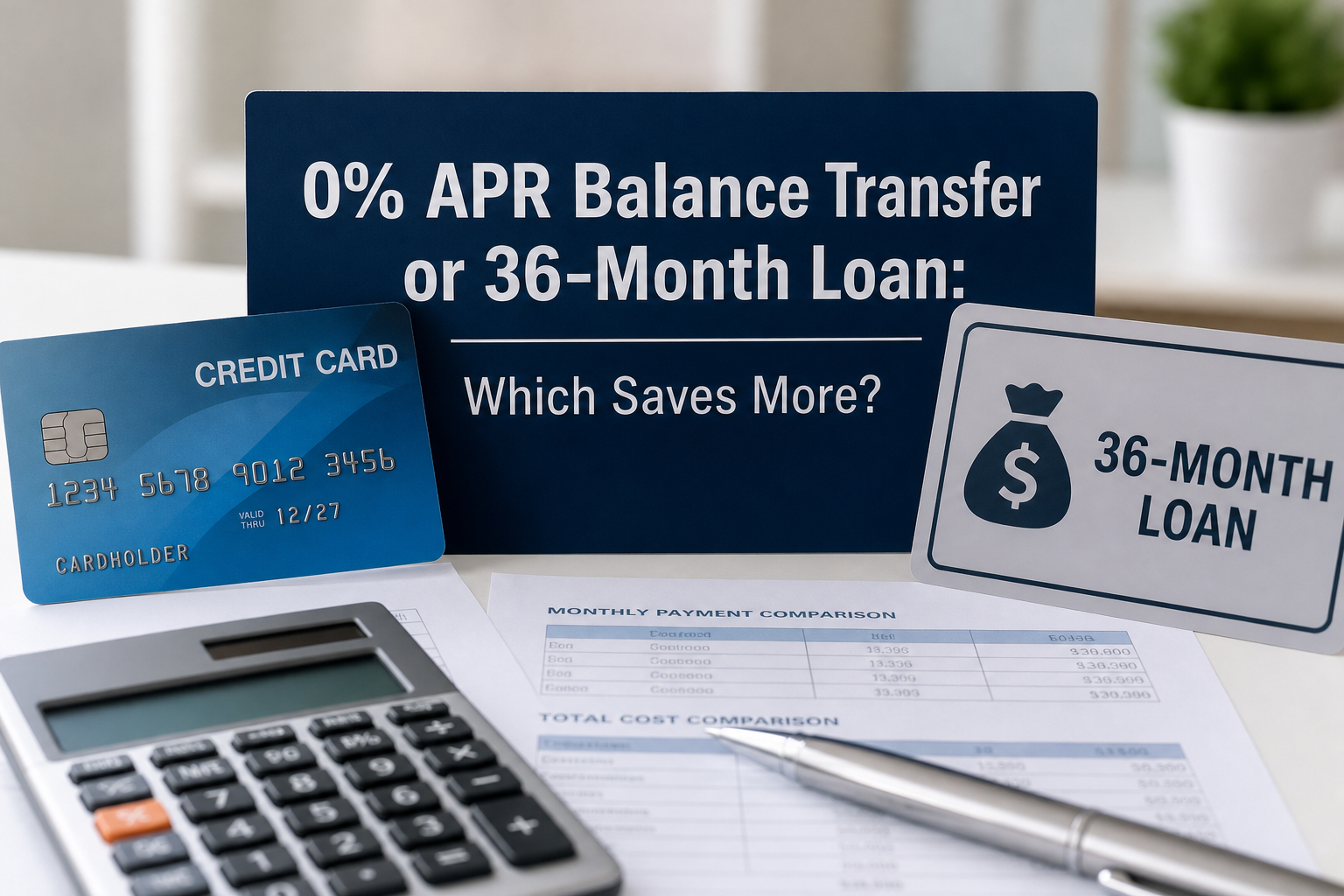
In today’s economic climate, where elevated credit card interest rates hover around 20% or more, consumers are increasingly seeking strategic debt repayment options. This article compares two popular methods for managing existing debt: 0% APR balance transfers and 36-month fixed loans. By closely examining the costs associated with each option, we’ll determine which strategy offers the most savings when attempting to pay off $15,000 in debt.
Comparing Costs: 0% APR Balance Transfer vs. 36-Month Loan
When contemplating a 0% APR balance transfer, it’s crucial to understand the effective costs beyond just the interest rate. For instance, if you transfer $15,000 to a credit card offering 0% APR for 18 months with a 4% transfer fee, you’ll initially incur a charge of $600 upfront. This places your total debt at $15,600, which would need to be paid off within the promotional period to avoid steep interest rates that could reach 25% or more post-promo. If you manage to pay off the entire balance within those 18 months, your monthly payment would be around $866.
On the other hand, a 36-month fixed personal loan at an interest rate of 11.5% could allow you to lock in a structured payment plan without worrying about fluctuating rates. For a loan of $15,000, your monthly payments would total approximately $500, which includes the principal and interest. Over the life of the loan, you’d pay roughly $3,000 in interest, making your total repayment approximately $18,000. While the monthly payment is less than a balance transfer, the total cost over time is significantly higher.
Ultimately, the choice between a balance transfer and a fixed loan hinges on your payment discipline and ability to meet deadlines. If you’re confident in your ability to pay off the balance before the promotional period ends, a balance transfer may yield substantial savings. However, if you prefer a structured, predictable payment plan and a steadier approach to your finances, the 36-month loan may be more suitable.
Key Factors to Maximize Savings on Your Debt Strategy
When evaluating these options, consider your borrowing profile and cash flow management. High-FICO borrowers with stable incomes may benefit from the zero-interest period offered by balance transfers, capitalizing on the chance to pay down principal without accruing interest. Conversely, if your cash flow is more unpredictable, a fixed-rate loan provides a safeguard against potential interest rate spikes, allowing for easier budgeting with fixed monthly payments.
Another factor to consider is the potential for promotional period traps. Many borrowers fall into the pitfall of not paying off their balance before the promotional period expires. Once the introductory rate ends, the remaining balance will start accruing interest at the regular APR, leading to potentially higher costs down the line. In contrast, a fixed loan provides clarity and structure, ensuring that you won’t be caught off guard by sudden interest rate increases or payment fluctuations.
Finally, strategic debt consolidation should also be considered when deciding between these two options. If you have multiple high-interest debts, consolidating with a 0% APR balance transfer can simplify payments and reduce the overall interest burden during the promotional period. On the other hand, for those with a single debt that can be addressed with a fixed-rate loan, the latter might offer a more manageable pathway to financial relief.
In conclusion, both a 0% APR balance transfer and a 36-month fixed loan serve as viable methods for managing substantial debt, but the best option largely depends on individual circumstances. For disciplined payers who can navigate the promotional landscape, balance transfers may yield greater savings. However, for those seeking predictability and a structured payment approach, a fixed loan can offer peace of mind and a clear path to becoming debt-free. Ultimately, understanding your financial habits and objectives will be the key to maximizing your savings in a high-interest environment.